
What the NACS Charge Port Means for Fast Charging a 2027 Chevrolet Bolt
September 18 2026,
Charging an EV shouldn’t require a stack of adapters and a guessing game at the plug. If you’re weighing a 2027 Chevrolet Bolt, one of the first things worth understanding is how it charges, at home, on the road, and everywhere in between.
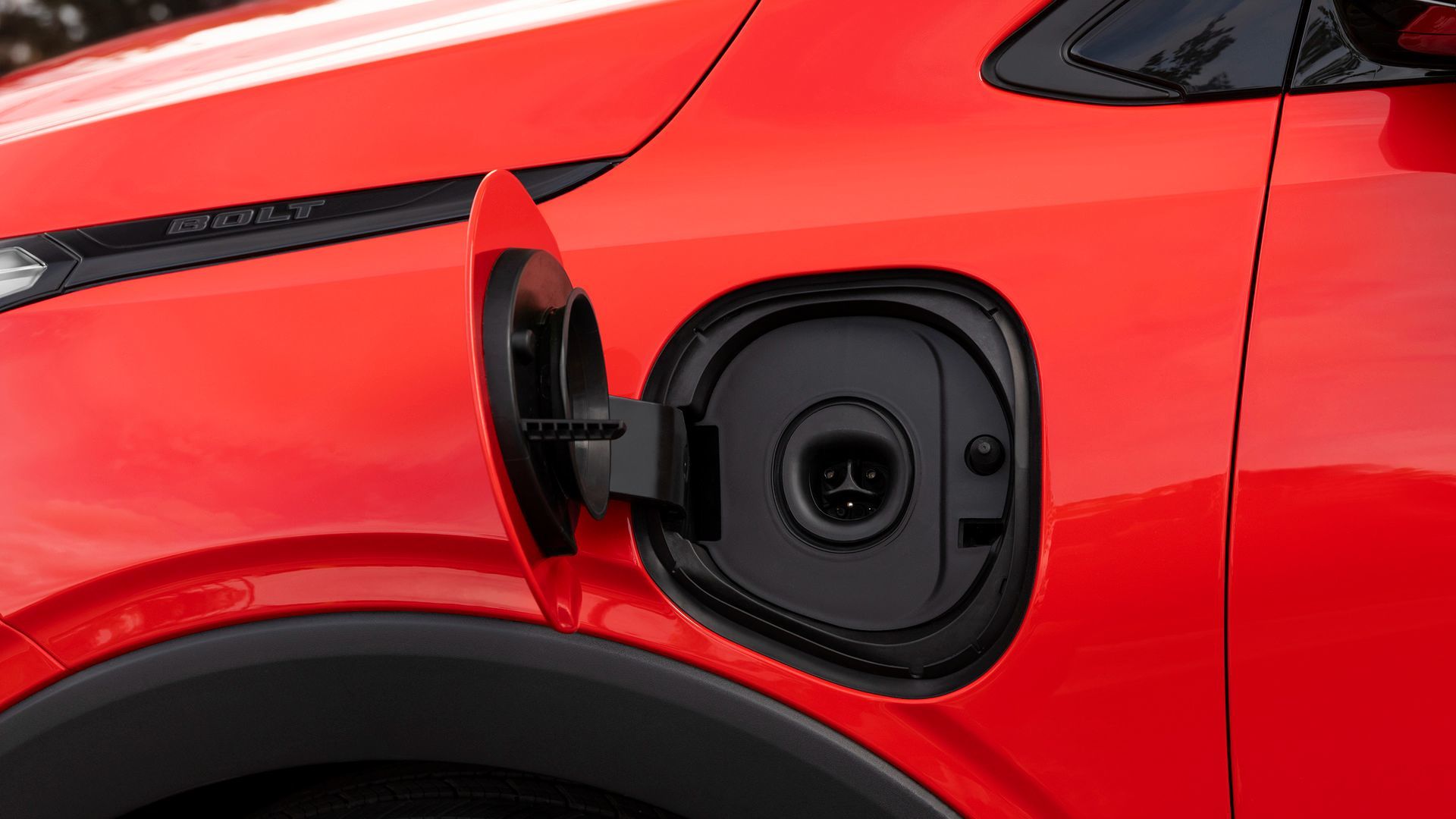
The short version: the Bolt uses a native NACS charge port. That single decision shapes almost everything about daily ownership, from the cord in your trunk to how a fast-charge stop actually feels.
What the Native NACS Port Actually Is
NACS is the physical connector built into the Bolt’s charge port from the factory. It is not an add-on or a converted design; every charging path on the vehicle, from a household outlet to a public fast charger, routes through that same port.
For Quebec shoppers, the practical upside is fewer moving parts. You are not carrying a permanent adapter just to use the plug that came with the car. The Dual Level Charge Cord that comes with the Bolt uses the NACS vehicle connector directly, with changeable attachment plugs for 120-volt (Level 1) and 240-volt (Level 2) charging.
How Home, Public, and Fast Charging Work in Practice
Daily charging runs through an 11.5 kW capable onboard charging module, standard on the Bolt. Plug the included cord into a standard 120-volt three-prong outlet for Level 1 charging, or swap the cord end for a 240-volt NEMA 14-50 outlet to charge at up to 7.7 kW on Level 2.
For a dedicated home setup, the optional GM PowerUp 2: NACS Charger is a hardwired residential unit rated up to 11.5 kW at 40 amps, professionally installed.
When you’re away from a NACS-native charger, two optional adapters cover the gaps. The GM J1772 AC Adapter connects the Bolt to public J1772 Level 2 chargers, supporting speeds up to 19.2 kW at those stations. The GM CCS1 DC Adapter lets the Bolt use public CCS1 DC fast chargers that aren’t NACS-equipped.
|
Charging Scenario |
Connector Used |
What It Delivers |
|
Home Level 1/2 |
Included Dual Level Charge Cord (NACS) |
Up to 7.7 kW on a 240V outlet |
|
Public AC (non-NACS) |
Optional GM J1772 AC Adapter |
Level 2 speeds up to 19.2 kW |
|
Public DC fast (non-NACS) |
Optional GM CCS1 DC Adapter |
Access to CCS1 fast-charging stations |
The 65 kWh Lithium Iron Phosphate battery pairs with a 150 kW+ DC fast-charging capability at native NACS stations, with a GM-estimated 10 to 80 percent charge in 25 minutes.
Why This Matters Once You’re Actually Living With the Car

Most charging happens at home, quietly, overnight. That’s where the onboard charger and included cord do the real work, and it’s also where the illuminated charge port earns its keep. A green ring of light around the port makes it easier to line up the plug in low light, and it doubles as a charge status indicator, so you can tell where a session stands without walking around to check a screen.
Inside the cabin, the 11-inch Driver Information Centre shows battery status alongside a selection of driver information screens, and the 11.3-inch Google built-in display adds real-time navigation. Checking your range before a busy evening or a cold-morning errand run takes seconds.
DC fast charging matters most on the days home charging isn’t enough: a longer weekend drive, a schedule that doesn’t leave room for an overnight top-up, or a stretch of consecutive errands. That’s when the 150 kW+ rate and the 25-minute 10-to-80 percent window turn a fast-charging stop into something closer to a short break than a planning problem.
Who Gets the Most Out of a Native NACS Setup
Commuters with a home outlet or a 240-volt setup get the simplest version of Bolt ownership: plug in overnight, unplug with a full charge, using the cord that comes with the car. The 421.6 km electric range and 210 hp front-motor propulsion system cover the daily loop without a second thought.
Apartment and condo dwellers without dedicated home charging lean more on the adapter side of the equation, using the GM J1772 AC Adapter at public Level 2 stations. It’s an extra step, but one the Bolt is built to handle without changing which charge port the car uses.
Suburban owners who occasionally drive further benefit from both sides: home Level 2 charging for routine use, and native NACS DC fast charging, or the CCS1 adapter where needed, for the occasional longer trip. Chevrolet also bundles the adapters into the optional Level 2 and Fast Charging Adapter Package and the Charging Essentials Package, which pairs the GM PowerUp 2 home charger with both adapters for one purchase.
The Bolt’s hatchback layout and five-seat packaging round out the picture for anyone cross-shopping it as an all-purpose vehicle rather than a commuter-only EV. With 458 L of cargo space behind the rear seats and 1,594 L with the seats folded, it handles errands and a fast-charging road trip stop with the same five-passenger flexibility.
Talk Through Your Charging Setup at Le Relais Chevrolet
The 2027 Bolt’s native NACS port, 11.5 kW onboard charger, and 150 kW+ DC fast-charging capability are designed to make home, public, and fast charging work together rather than compete for your attention. The included cord and optional adapters cover most charging situations a Quebec driver will run into.
Visit Le Relais Chevrolet in Montreal to talk through your home-charging setup, ask which adapters make sense for your routine, and book a test drive to see how the charging displays and cabin tech come together in person.