Does Trim Change City Fuel Use in a 2026 Chevrolet Silverado 1500 TurboMax?
October 26 2026,
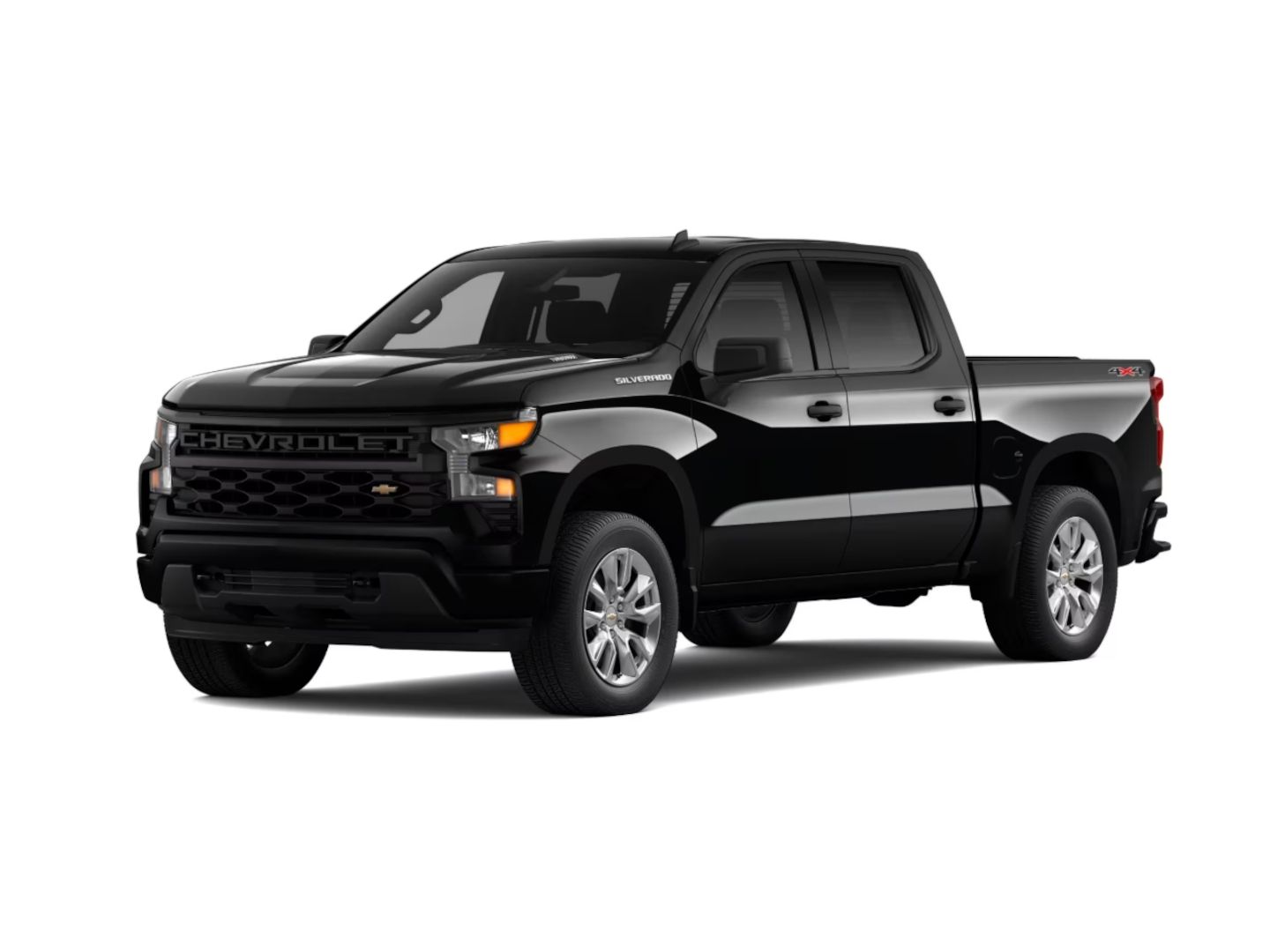
Stop-and-go traffic on Quebec’s urban routes puts any truck’s efficiency to a real test, and the TurboMax engine shows up on more than half the Silverado 1500 lineup. The question is whether the trim wrapped around that engine changes how much fuel it burns downtown, or whether it’s really about how you drive.
This guide breaks down which TurboMax configurations matter for daily city use, and which trim differences are cosmetic rather than functional.
Does Trim Choice Change City Fuel Use on the TurboMax?
City fuel use depends more on stop-and-go driving, idling time, payload, and road conditions than on the trim name on the tailgate. Still, the numbers show trim isn’t irrelevant, especially once it changes the truck’s shape.
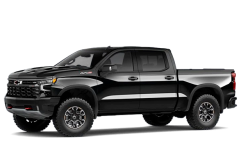
The 2.7 L turbocharged four-cylinder TurboMax makes 310 hp and 430 lb-ft of torque. On the WT and Custom, tested in Crew Cab short bed 4WD form, it posts 13.7 L/100 km city and 11.8 L/100 km highway. The Custom Trail Boss, same engine, same cab and bed, climbs to 14.6 L/100 km city and 13.6 L/100 km highway.
|
Trim (Crew Cab short bed, 4WD TurboMax) |
Ground Clearance |
City |
Highway |
|
WT |
205 mm |
13.7 L/100 km |
11.8 L/100 km |
|
Custom |
205 mm |
13.7 L/100 km |
11.8 L/100 km |
|
Custom Trail Boss |
282 mm |
14.6 L/100 km |
13.6 L/100 km |
Which Trims Get the TurboMax, and Which Don’t?
This comparison covers only the trims that actually offer the 2.7 L TurboMax: WT, Custom, LT, RST, Custom Trail Boss, and LT Trail Boss. They split roughly into three groups.
WT and Custom are the work-focused pair, built around the TurboMax with a Durabed cargo box and Chevy Safety Assist as standard content. LT and RST lean toward comfort and technology, adding a 13.4-inch touchscreen and a 12.3-inch reconfigurable Driver Information Centre while keeping the same base engine. Custom Trail Boss and LT Trail Boss are the off-road-oriented pair, both carrying a 51 mm factory suspension lift and the Z71 Off-Road Package on top of the TurboMax.
LTZ, High Country, and ZR2 round out the full nine-trim lineup, but none of them carry the TurboMax at all. LTZ and High Country run the 5.3 L EcoTec3 V8 as standard, with the 6.2 L V8 or the Duramax 3.0 L diesel available. ZR2 runs the Duramax diesel as standard, with the 6.2 L V8 available, and is built purely for off-road capability rather than everyday efficiency. Since none of the three use the TurboMax, they sit outside this fuel-use comparison.
What Actually Moves the Fuel-Economy Needle in the City?

The Custom Trail Boss’s jump to 14.6 L/100 km city isn’t about the engine, since it’s the same 2.7 L TurboMax as the WT and Custom. It comes from the hardware bolted around it: a taller ride height, wider all-terrain tires, and the Z71 Off-Road Package add weight and rolling resistance. LT Trail Boss carries the same 51 mm lift and off-road package, so it follows a similar pattern even without a separately tested figure.
Other trim differences don’t touch fuel use at all. Black or chrome assist steps, a black chrome exhaust tip, black “CHEVROLET” tailgate lettering, and nameplate finishes change how the truck looks, not how it drives. If a trim change is about paint, badges, or wheel finish, it stays out of the fuel-use conversation. If it changes ride height, tire size, or drivetrain hardware, it belongs in it.
Quick Answers for Quebec Drivers
- The TurboMax spans six trims: WT, Custom, LT, RST, Custom Trail Boss, and LT Trail Boss.
- WT and Custom post the lowest tested TurboMax city figure, at 13.7 L/100 km.
- Custom Trail Boss’s off-road lift and tires push that to 14.6 L/100 km city.
- LTZ, High Country, and ZR2 skip the TurboMax entirely for V8 or diesel power.
Which TurboMax Setup Fits Your Driving?

For daily commuting and errands around town, WT or Custom keep the lowest tested city number and stay closer to the ground, which helps in tight parking and parking garages. Both share a 1,781 L cargo box and 986 kg payload for weekend hauling without added ride height to manage.
For mixed city and highway driving where comfort matters more, LT or RST add the larger touchscreen and reconfigurable cluster on the same TurboMax engine, without the fuel penalty that comes with a lift kit.
For occasional trail use, Custom Trail Boss and LT Trail Boss bring the 51 mm lift, locking rear differential, and all-terrain tires. That capability comes with a taller stance and wider tires that make tight city streets and underground parking less forgiving on a daily basis.
For towing-heavy or work applications that need more than the TurboMax offers, LTZ, High Country, and ZR2 step up to V8 or diesel power, trading this specific city-efficiency comparison for added capability.
Finding the Right Silverado 1500 TurboMax Trim
The 2026 Silverado 1500 TurboMax lineup shows that city fuel use tracks the truck’s shape as much as its engine badge. Cab, ride height, and off-road hardware shift the numbers more than trim level on its own, especially in stop-and-go Quebec traffic.
Visit Le Relais Chevrolet in Montreal to sit in the WT, Custom, RST, or Custom Trail Boss and compare how each TurboMax setup feels in daily traffic. Bring your typical commute and cargo needs, and work through which cab, bed, and drivetrain combination fits best.