
2026 GMC Sierra 1500 AT4 or Denali Which Half-Ton Delivers Off-Road Capability or Luxury Comfort
August 29 2026,
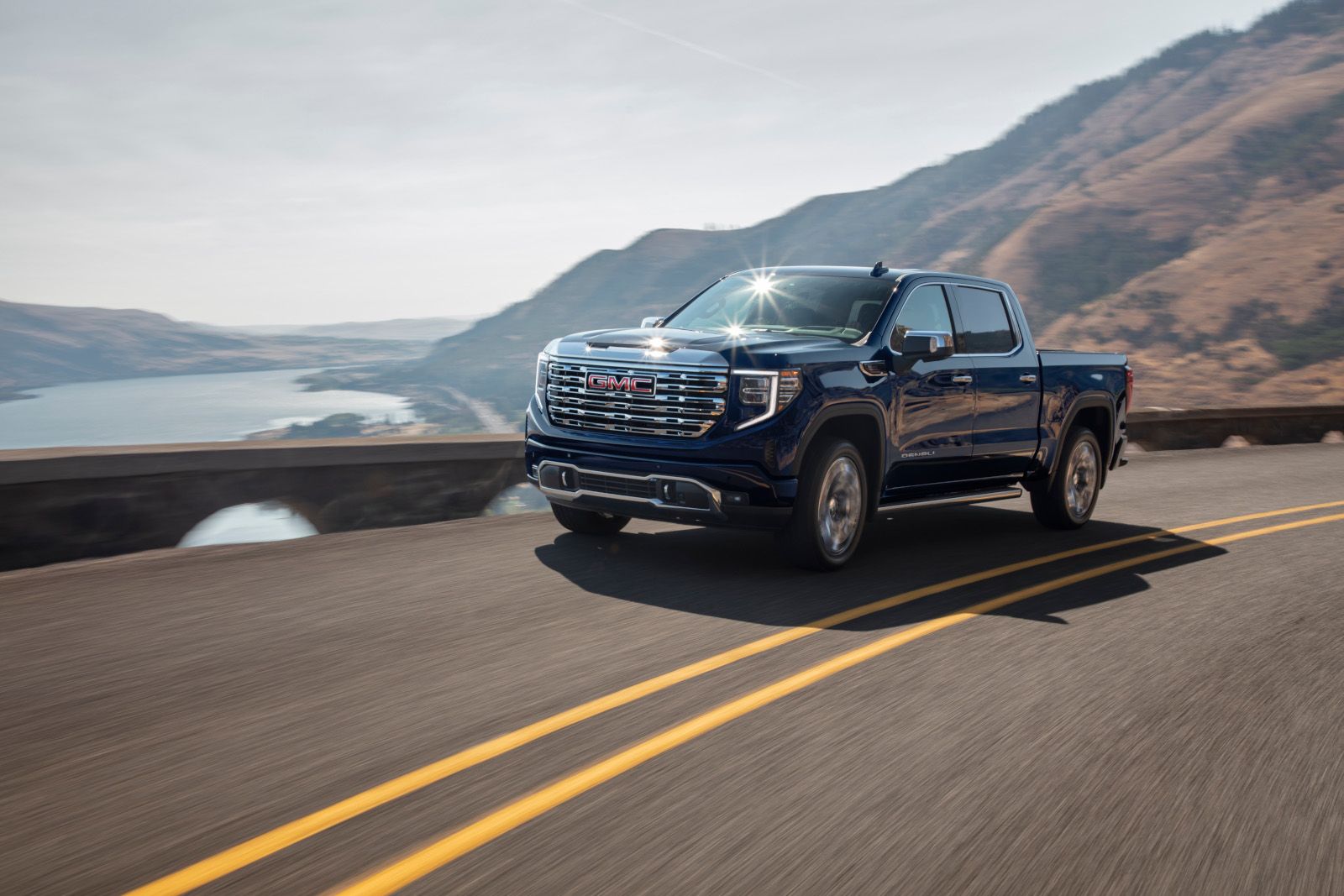
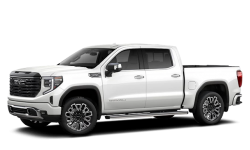
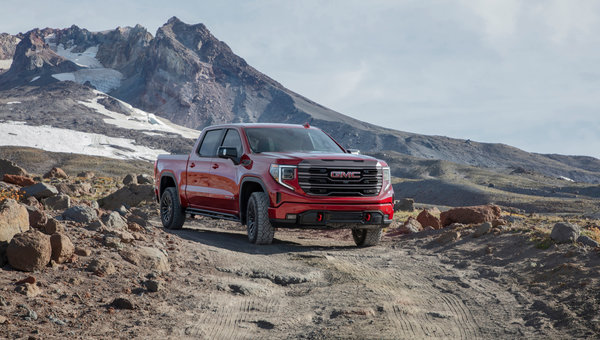
Deciding between the Sierra 1500 AT4 and Denali comes down to how you actually use a truck. One is built around gravel roads, job sites, and trail access. The other is built around a quiet cabin, confident towing, and a more finished interior.
Quebec drivers face both worlds, sometimes in the same week: a construction site on Monday, a highway run to the cottage on Friday. This comparison lines up the two trims on the specs that actually matter for that split.
AT4 vs Denali: Side-by-Side
|
Spec |
AT4 |
Denali |
|
Standard engine |
3.0L Duramax Turbo-Diesel I6, 305 hp, 495 lb-ft |
5.3L EcoTec3 V8, 355 hp, 383 lb-ft |
|
Available engine |
6.2L EcoTec3 V8, 420 hp |
6.2L EcoTec3 V8, 420 hp; 3.0L Duramax Turbo-Diesel |
|
Max towing |
9,000 lbs (4,082 kg) |
9,400 lbs (4,264 kg) |
|
Payload |
2,372 lbs (1,076 kg) |
2,273 lbs (1,031 kg) |
|
Ground clearance |
11.1 in (282 mm) |
205 mm |
|
Fuel tank |
91 L (24 gal) |
91 L (24 gal) |
|
Cargo box (Short Bed) |
69.92 in length, 1,781 L volume |
69.92 in length, 1,781 L volume |
|
Drivetrain |
4WD, two-speed Autotrac transfer case |
4WD |
Both trims come exclusively as Crew Cab 4WD trucks with a ten-speed automatic and Electronic Precision shift, so the fork here is about equipment and tuning, not cab size or drive layout.
Powertrain and Towing: Diesel Torque vs V8 Range
The AT4’s standard 3.0L Duramax diesel puts torque first: 495 lb-ft, more than any gas engine on either trim, and it returns 10.7 L/100 km in the city and 9.3 L/100 km on the highway. That torque curve is built for pulling a loaded trailer up a grade, not for revving hard.
Denali’s standard 5.3L EcoTec3 V8 makes 355 hp and 383 lb-ft, with fuel economy of 15.9 L/100 km city and 13.0 L/100 km highway. It trades some low-end pull for broader everyday drivability, and its 9,400 lbs (4,264 kg) tow rating edges past the AT4’s 9,000 lbs (4,082 kg).
Both trims can also be optioned with the 420 hp 6.2L EcoTec3 V8, and Denali adds the same 3.0L Duramax diesel as an available engine. So a buyer who wants diesel torque with Denali’s cabin does not have to choose between the two.
Off-Road Hardware vs Road-Oriented Confidence
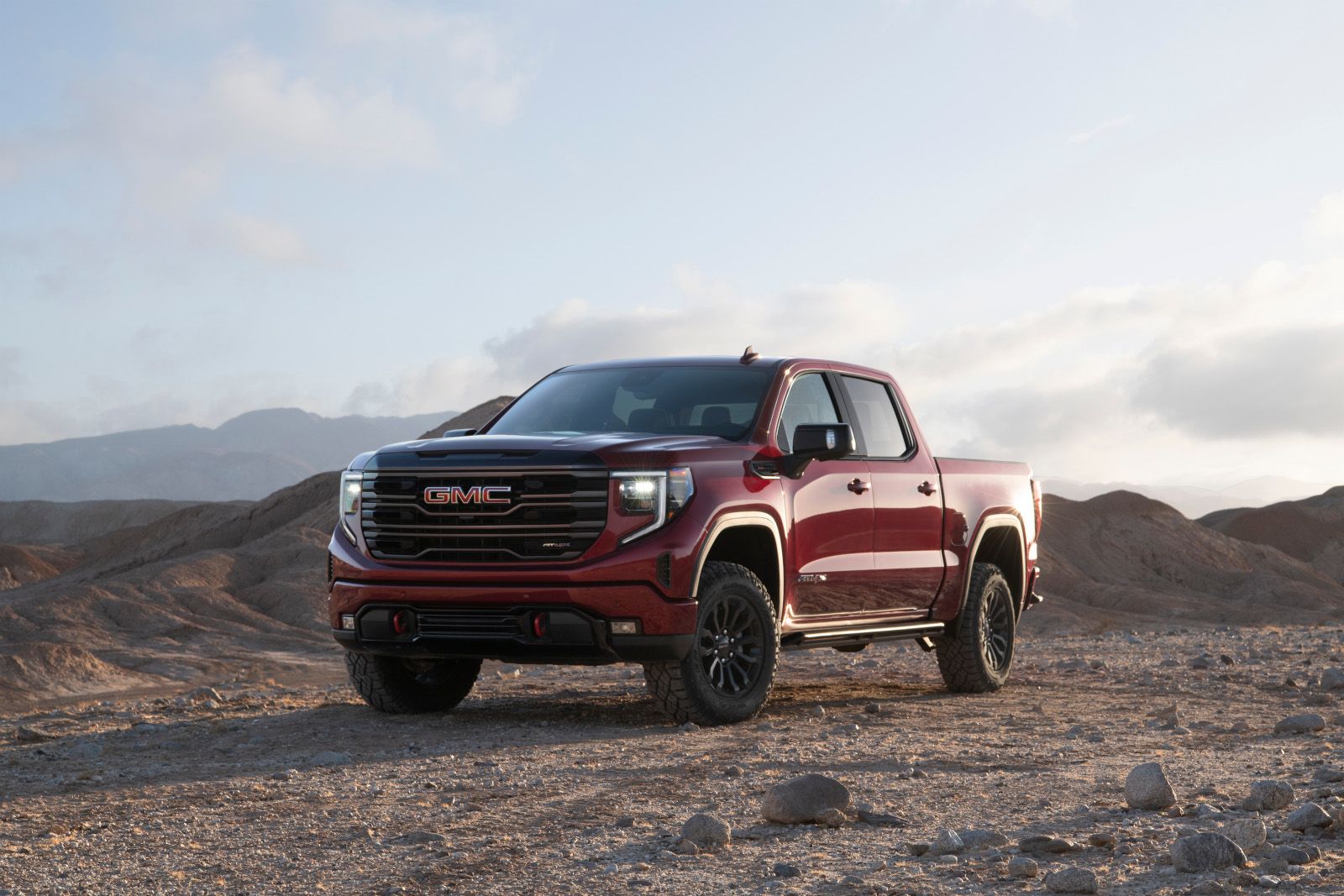
The AT4’s case is built into its suspension: a factory two-inch lift, off-road-tuned dampers, a two-speed Autotrac transfer case, an automatic locking rear differential, skid plates, and red recovery hooks. Ground clearance runs 11.1 in (282 mm), and Hill Descent Control is standard.
Denali runs a Denali Premium Suspension with Adaptive Ride Control, tuned for a smooth ride on pavement rather than trail clearance. Ground clearance sits at 205 mm. It is still a 4WD truck built for winter roads and job sites, just not one aimed at rock crawling or deep gravel washouts.
For a driver who regularly leaves paved roads, whether for a work site or a camp access road, the AT4’s lift and locking rear differential answer a question the Denali’s suspension was never asked to solve.
Cabin and Technology
Both trims share the core technology package: a 12.3-inch driver display, a 13.4-inch infotainment screen with Google built-in, wireless Apple CarPlay and Android Auto, wireless charging, and an in-vehicle trailering app. Neither buyer is giving up modern tech to get the other truck’s strengths.
Where they split is materials and seating. AT4 uses a Jet Black interior with Kalahari accents and heated, ventilated perforated leather front seats built for a rugged daily grind. Denali moves toward open-pore wood trim, forged perforated-leather seating, and 12-way power front seats with power lumbar, along with an available Super Cruise hands-free driving system.
Denali also offers the CarbonPro composite bed as an available option, pairing a lighter bed structure with its more finished cabin. It’s a detail that matters for buyers who want durability without the visual ruggedness of AT4’s skid-plated exterior.
Which Sierra 1500 Trim Fits Your Drive?
For a Quebec buyer who spends real time on gravel roads, job sites, or trail access, the AT4’s two-inch lift, locking rear differential, and 495 lb-ft diesel torque are the deciding factors. It is built to answer terrain, not just haul a trailer on pavement.
For a buyer whose priority is highway towing, cabin refinement, and a quieter daily commute, the Denali’s 9,400 lbs (4,264 kg) tow rating and wood-and-leather cabin change the equation. It is the trim built around comfort at the front of that trailer, not behind it.
Both trims share the same cab, the same core technology, and the same fuel tank, so neither buyer is giving up the basics to get their priority.
Test-Driving the Sierra 1500 AT4 and Denali
The Sierra 1500 AT4 and Denali split the same platform into two different jobs: one built for terrain, one built for refinement and trailering comfort. Both keep the same cab, technology suite, and fuel capacity underneath.
Visit Le Relais Chevrolet in Montreal to sit in both trims and compare the AT4’s off-road hardware against the Denali’s cabin finish before you decide which one matches your driving.