Super Cruise on Montreal's A-40: How Hands-Free Driving Reduces Commute Fatigue
November 30 2025,
The Autoroute Métropolitaine's rush-hour traffic follows a predictable pattern: brake, crawl, merge, repeat. Morning and evening commutes on Montreal's A-40 involve constant throttle and brake modulation, continuous steering corrections, and the accumulated fatigue of stop-and-go driving.
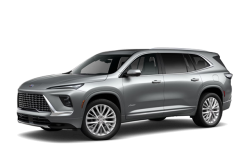
Chevrolet's Super Cruise hands-free driving system is available on select 2025 and 2026 Chevrolet SUVs: the Traverse, Tahoe, and Suburban. The system uses cameras, sensors, GPS, and lidar map data to handle steering, acceleration, and braking on compatible highways, including major routes through Montreal. A camera-based Driver Attention System monitors driver engagement while the vehicle manages the repetitive tasks of congested highway driving.
Traditional Cruise Control vs. Super Cruise
Traditional cruise control maintains a set speed but requires constant steering input and manual brake intervention when traffic slows. Adaptive cruise control adds following-distance management from vehicles ahead, but you still steer manually. Super Cruise combines adaptive cruise functionality with lane-centring steering assistance, creating hands-free driving under proper conditions.
The system operates on more than 640,000 kilometres of compatible highways across Canada and the United States. In Quebec, this includes the A-40, A-15, A-20, and A-10—the highways Montreal-area drivers use most frequently. Once engaged on these mapped roads, Super Cruise handles lateral positioning within your lane while maintaining your selected speed and following distance from traffic ahead.
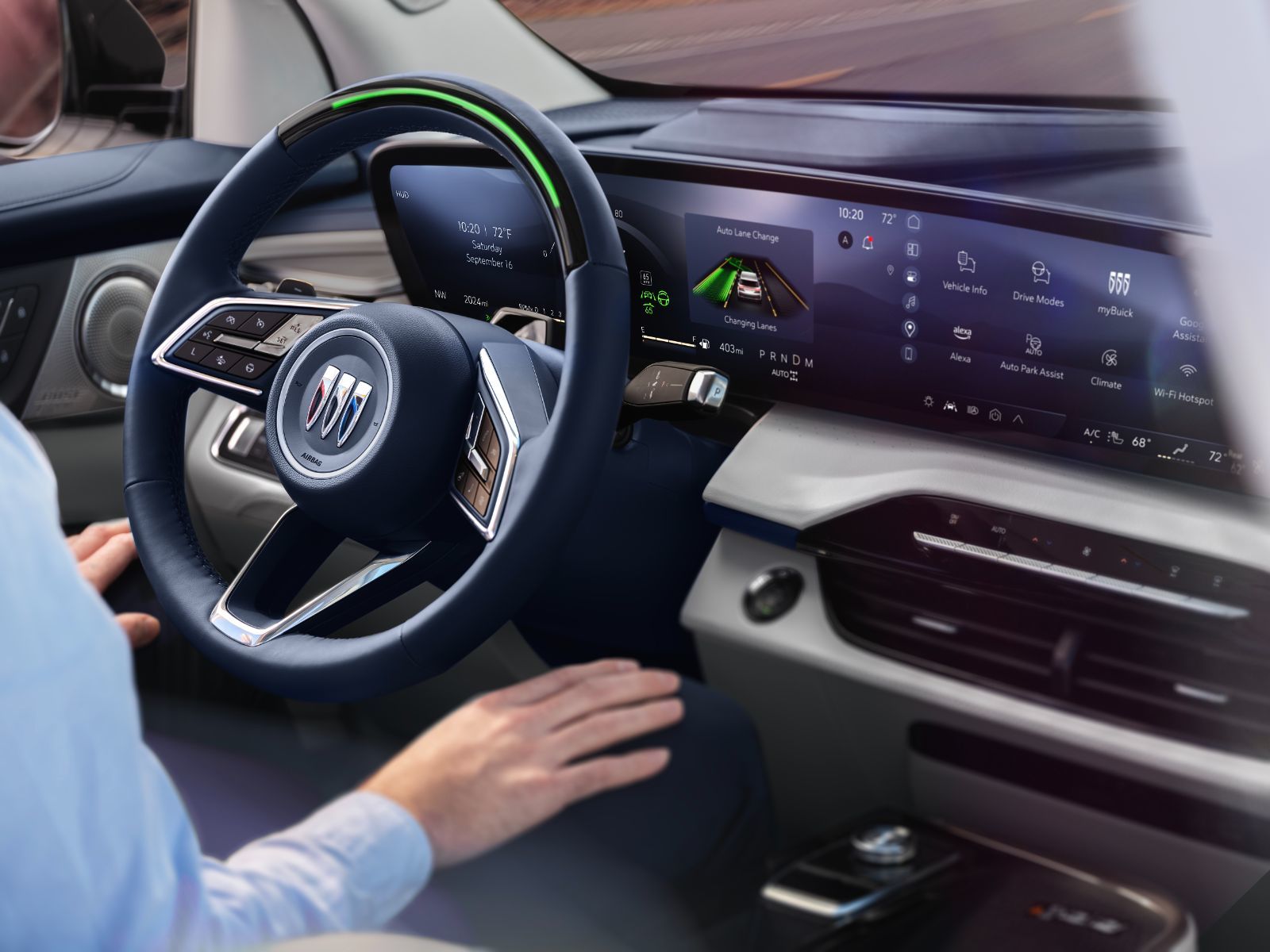
The Driver Attention System uses a small camera mounted on the steering column to track your head position and eye gaze, confirming you're monitoring the road. If the system detects inattention, it provides escalating alerts through visual cues on the steering wheel light bar and audible warnings. This attention monitoring differs from systems that rely solely on steering wheel torque sensors.
Stop-and-Go Traffic Operation
The A-40 during rush hour frequently comes to complete stops, then accelerates briefly before stopping again. Super Cruise is designed for this scenario.
When Super Cruise is active and traffic slows, the system automatically applies braking to maintain your selected following gap from the vehicle ahead. If traffic comes to a complete stop, Super Cruise brings your vehicle to a halt and holds position. When traffic resumes moving, the system automatically accelerates to restore your set speed and following distance—no pedal input required.
This capability applies to the Métropolitaine's bottlenecks: the Décarie interchange, the approaches to the Turcot, and the congested stretch between Boulevard Saint-Laurent and Avenue Papineau. Instead of constantly modulating throttle and brake while steering through lanes, you maintain attention on traffic patterns and surrounding vehicles while Super Cruise manages the mechanical execution.
Lane-Changing Functions
Super Cruise includes two lane-change functions.
Lane Change on Demand activates when you signal your intention to change lanes. The system checks for an opening in the target lane using its radar and camera sensors. If conditions are safe, Super Cruise executes the lane change without requiring you to take manual control of steering. You activate your turn signal, the system verifies clearance, and the vehicle moves into the adjacent lane.
Automatic Lane Change operates on properly equipped vehicles. When the system detects slower traffic ahead in your current lane, it can initiate a lane change autonomously—activating the turn signal, moving to the passing lane, overtaking the slower vehicle, signalling again, and returning to the original lane. This feature applies to the A-40's express lanes during off-peak hours when traffic flow varies between lanes.
Both functions require the driver to remain attentive. The system won't change lanes if it detects unsafe conditions, and you can override at any time by taking manual control of the steering wheel.
Vehicle Availability and Requirements
Super Cruise is available on several Chevrolet SUV models:
2025–2026 Chevrolet Traverse:
- Available on LT trim
- Standard on RS trim
- Includes three-year trial of Super Cruise connectivity
2025 Chevrolet Tahoe:
- Available on LT and RST trims
- Available on Premier and High Country trims
- Requires factory installation (cannot be added after production)
2025 Chevrolet Suburban:
- Available on LT and RST trims
- Available on Premier and High Country trims
- Requires factory installation (cannot be added after production)
All Super Cruise-equipped vehicles require an active Chevrolet Connected Services subscription to support system functionality. New 2025 models include three years of connectivity starting from the vehicle delivery date. After the trial period expires, a paid subscription is required to continue using Super Cruise.
Operating Requirements and Limitations
Super Cruise functions under specific conditions designed to ensure safe operation. The system requires clearly visible lane markings, GPS signal availability, and confirmation that you're driving on a compatible, pre-mapped highway. The camera and radar sensors must remain unobstructed—snow, ice, or dirt covering these components will prevent activation.
The system is not designed for all driving scenarios. Super Cruise should not be used in construction zones, when lane markings are poor or absent, in tunnels, on highway shoulders, or when towing a trailer. Weather conditions matter: slippery roads from rain, ice, or snow can limit system availability. The system also deactivates when Teen Driver mode is active.
Super Cruise will not steer to avoid objects, navigate construction zones, or respond to traffic control devices. You remain responsible for merging, exiting highways, and stopping for signals or signs. The system assists with highway driving but does not replace driver judgment or responsibility.
Real-World Application on Montreal Routes
Consider a typical morning commute from Laval into downtown Montreal via the A-40 East. You enter the highway at Av. Papineau, accelerate to merge, and once you're in the flow of traffic on the Métropolitaine, you activate Super Cruise. The steering wheel light bar turns green, confirming the system is engaged.
As you approach the Décarie interchange, traffic density increases and speeds drop. Super Cruise automatically reduces your speed to maintain following distance. Traffic stops completely near the Boulevard Saint-Laurent exit. The system brings your vehicle to a halt and holds position. When the vehicle ahead moves, Super Cruise resumes motion without requiring you to touch the accelerator.
You remain attentive, monitoring merge patterns from entrance ramps and watching for vehicles changing lanes abruptly—common occurrences on the A-40. The constant throttle-brake-throttle cycle and the need to make continuous micro-adjustments to steering are handled by the system. Your cognitive load decreases, reducing the fatigue that accumulates over repeated commutes.
Competitor System Comparison

Several manufacturers offer hands-free driving systems, but capabilities vary. BMW's Extended Traffic Jam Assistant operates at speeds up to 70 km/h on limited-access highways, similar to Super Cruise's operating domain. Hyundai's Navigation-Based Smart Cruise Control adjusts speed for curves but doesn't offer full hands-free operation.
Super Cruise operates on more than 640,000 kilometres of mapped highways across North America and includes automatic lane-changing capability on equipped vehicles. The Driver Attention System's camera-based monitoring differs from systems relying solely on steering wheel sensors.
For Montreal drivers, the relevance comes down to route compatibility. Super Cruise functions on the highways you use: the A-40, A-15, A-20, A-13, and A-10. The system's map data receives periodic updates through your Connected Services subscription, ensuring compatibility as highway infrastructure changes.
Technology Integration and Updates
Super Cruise relies on lidar map data that must remain current for the system to function. Map updates are delivered automatically via your Chevrolet Connected Services plan. If a map update is not completed within seven months, Super Cruise will be disabled until the vehicle receives the update or is serviced at a Chevrolet dealer.
The system integrates with Google Maps on vehicles equipped with Google built-in infotainment. When you enter a destination, Google Maps can display Super Cruise-compatible routes and indicate how many minutes of your trip can be driven hands-free. Enhanced integration ensures you're navigated to the correct lane at exit ramps and interchanges—useful on complex Montreal highway junctions.
Service and Maintenance Considerations
Super Cruise combines multiple sensors, cameras, and software algorithms. GM specifies that only trained technicians at authorized Chevrolet dealers should service the system. The camera and radar sensors require precise calibration—improper service can compromise system functionality or safety.
Regular maintenance of your vehicle's windshield and sensor areas is important. Keep the windshield clean and free of obstructions that could interfere with the Driver Attention System camera. Ensure radar sensors (typically located in the front grille area) remain unobstructed by snow, ice, or debris, especially during Quebec winters.
Super Cruise for Montreal Commuting
Super Cruise makes sense for drivers who spend time on compatible highways in stop-and-go or steady-flow conditions. If your daily routine includes the A-40 during rush hour, the A-15 through the Laurentians, or the A-20 corridor, the system addresses the repetitive nature of these drives.
The technology won't eliminate traffic—you'll still spend the same amount of time on the road. The physical fatigue from constant steering corrections and throttle/brake modulation decreases. Your attention remains on the road and surrounding traffic, but the mechanical execution of driving is handled by the vehicle.
Super Cruise is not a replacement for attentive driving. The system requires you to monitor the road continuously and remain ready to take control when conditions require it. It offers assistance with the repetitive, fatiguing aspects of highway commuting—particularly on routes like the Métropolitaine with predictable but tedious traffic patterns.
Experience Super Cruise at Le Relais Chevrolet
Super Cruise-equipped Chevrolet Traverse, Tahoe, and Suburban models are available at Le Relais Chevrolet in Montreal. Schedule a demonstration drive to experience how hands-free highway driving functions on real Montreal routes. Our team can explain system operation, answer questions about compatibility with your typical driving patterns, and help determine which Super Cruise-equipped model fits your needs.